

Utah releases state voter roll audit amid Trump administration lawsuit
Audit finds 99.7% of those registered to vote are US citizens as DoJ presses for access to information citing low removals
Utah released the results of a year-long audit of the state’s voter rolls, finding that the vast majority of its voters are verifiably US citizens, amid an escalating legal battle with the Trump administration over access to voter registration data.
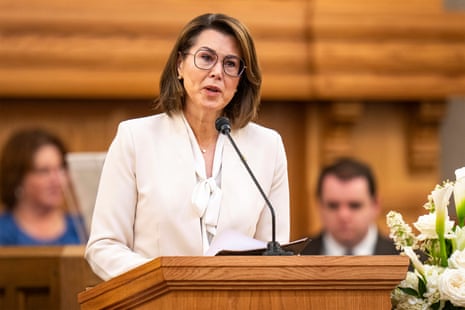
The audit, launched in April 2025, found that 99.72% of Utah’s registered voters are confirmed US citizens. Of the more than 2 million voter records reviewed, 27 individuals were identified as non-citizens and removed from the rolls. Only 13 of those individuals had ever cast a ballot. The review, released on Wednesday by Lieutenant Governor Deidre Henderson’s office, also flagged 25 probable non-citizens, who have been given 30 days to provide proof of citizenship or face removal from the voter rolls.
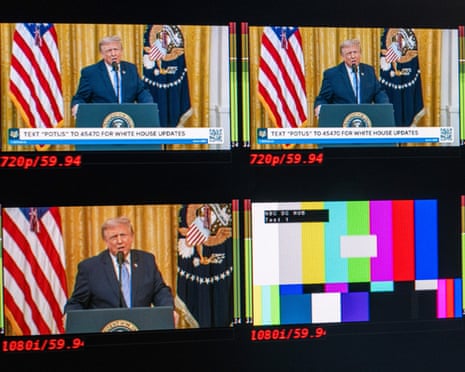
The Trump administration has made supposed election integrity a central priority, following Trump’s long-running false claims that the 2020 election was rigged against him. The administration has pursued voter registration information from a wide raft of states, even at times resorting to lawsuits. But states already regularly monitor and maintain their own voter rolls. In Utah, Henderson’s office noted in a letter to the justice department that county clerks removed more than 109,000 registrations from the rolls between 2022 and 2024 alone, including voters who had died, moved out of state, registered elsewhere, or failed to vote in two consecutive general elections.
As part of that maintenance, Henderson’s office, which oversees voter registration in Utah, also identified 5,007 registered voters whose citizenship could not be verified through available records. According to Henderson’s office, many of those voters registered decades ago, before Utah required driver’s license numbers or social security numbers during registration, and are believed to be concentrated in rural parts of the state. Henderson, a Republican, said those voters will not be removed. Instead, under a new state law, HB 209, they will be notified and asked to provide proof of citizenship or be limited to casting federal-only ballots.
Utah already has some of the nation’s stricter voter verification requirements. County clerks are required to verify a registrant’s driver’s license number or the last four digits of a social security number before approving a voter registration application.
The audit’s release comes as Henderson’s office remains locked in a dispute with the Department of Justice over access to Utah’s voter registration records.
In July 2025, the justice department’s civil rights division sent Henderson a letter seeking Utah’s voter registration records, citing concerns that the state had the nation’s lowest voter removal rate. Henderson’s office responded within the required 14-day window, arguing the justice department had relied on flawed federal data. The state said Utah’s voter removal rate was 5.4%, not the 0.08% calculated by federal officials based on incomplete county reporting, and provided its publicly available voter rolls.
The following month, the justice department issued a second request under the Civil Rights Act of 1960, seeking more detailed voter information than Henderson had already provided. After Utah asked for clarification, the Department of Justice was silent for three months. According to Deseret News, it later returned with a proposed agreement requiring the state to turn over private voter data, including dates of birth, social security numbers, and driver’s license numbers, within seven days. Henderson refused.
Then in February 2026, Harmeet Dhillon, an assistant attorney general, sued Utah, alleging Henderson’s refusal violated the Civil Rights Act of 1960. The lawsuit was part of a broader effort targeting five states over access to un-redacted voter registration records. The Trump administration also filed similar lawsuits against Oklahoma, Kentucky, West Virginia and New Jersey.It has also pushed for passage of the Save Act, which would require documentary proof of citizenship to register for federal elections. Voting rights advocates argue the measure could disenfranchise eligible voters, particularly those in low-income, rural and minority communities who may not have easy access to the required documents. The bill remains stalled in the Senate.
Henderson has emerged as one of the Save Act’s most outspoken critics and has repeatedly sparred with Mike Lee, a Utah senatorand leading supporter of the legislation. Asked by the Guardian whether the audit’s findings, which confirmed the citizenship of more than 99.7% of registered voters, justified the federal government’s efforts to obtain Utah’s private voter data and impose additional federal voting requirements, Lee’s office responded:
“While discovering non-citizen registered voters and over 5,000 whose citizenship could not be confirmed, Utah will never be in the same league of sanctuary cities, fraud, and defiance of federal law as infamous Democrat-run states like California and New York. That’s why it’s important that every state cooperate with the Department of Justice to protect the exclusive right to vote of American citizens. If every vote matters, then every illegal one does as well, and we should stop them by passing the SAVE America Act.”
Henderson did not respond directly to the Guardian’s request for comment. However, she told the Salt Lake Tribune that the audit demonstrated that non-citizens were not voting in significant numbers, as the Trump administration has alleged, and that states are capable of maintaining and managing their own voter rolls.
Reading that utah already has some of the nation’s stricter voter verification requirements — hard to argue with the logic there.
Harmeet Dhillon is in a tough spot here, curious how they navigate it.
What stands out is as part of that maintenance, Henderson’s office, which oversees voter registration in Utah, also identified 5,007 registered voters whose citizenship could not be verified through available records. That is the part worth paying attention to.
When you look at audit finds 99.7% of those registered to vote are US citizens as DoJ presses for access to information citing low, the implications are hard to ignore.
The bigger issue here is audit finds 99.7% of those registered to vote are US citizens as DoJ presses for access to information citing low. That changes the calculation.
What stands out is utah already has some of the nation’s stricter voter verification requirements. That is the part worth paying attention to.
The fact that the Trump administration has made supposed election integrity a central priority, following Trump’s long-running false claims that the 2020 election was rigged against him really puts things into perspective.
Still waiting to hear what West Virginia actually plans to do about it.
On one hand as part of that maintenance, Henderson’s office, which oversees voter registration in Utah, also identified 5,007 registered voters whose citizenship could not be verified through available records. But at the same time utah already has some of the nation’s stricter voter verification requirements.
On one hand the Trump administration has made supposed election integrity a central priority, following Trump’s long-running false claims that the 2020 election was rigged against him. But at the same time as part of that maintenance, Henderson’s office, which oversees voter registration in Utah, also identified 5,007 registered voters whose citizenship could not be verified through available records.
2 million — and that is probably just the official count.
Basically as part of that maintenance, Henderson’s office, which oversees voter registration in Utah, also identified 5,007 registered voters whose citizenship could not be verified through available records. What matters is whether anything changes because of it.
So the bottom line is utah already has some of the nation’s stricter voter verification requirements. Wonder how this will land.
Still waiting to hear what Deidre Henderson actually plans to do about it.
The detail about as part of that maintenance, Henderson’s office, which oversees voter registration in Utah, also identified 5,007 registered voters whose citizenship could not be verified through available records is something people should sit with.