


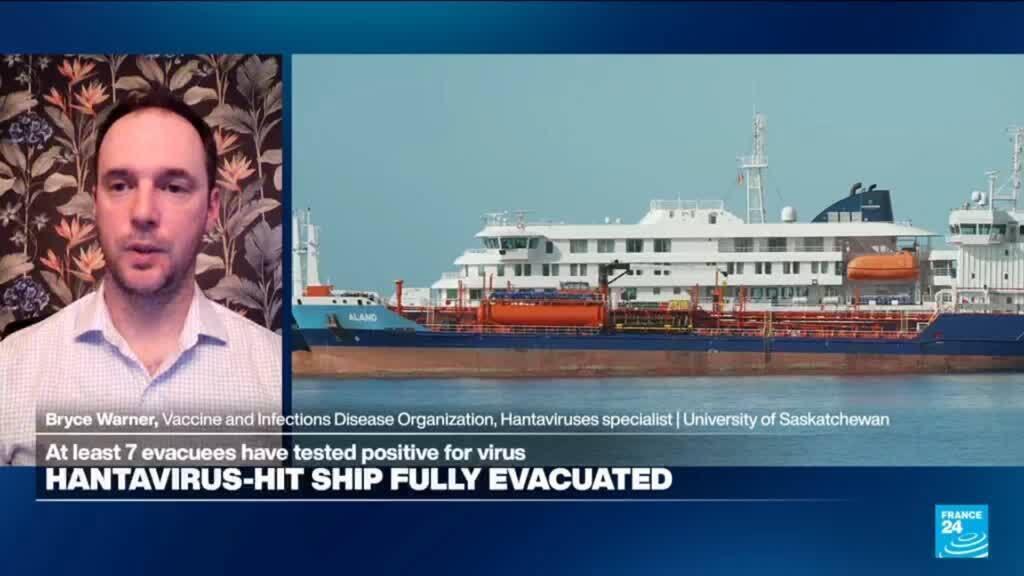
Genie Godula is pleased to welcome Bryce Warner, Canadian virologist and Research Scientist at Vaccine and Infectious Disease Organization. When reports emerged of suspected human to human transmission of the Andes virus, memories of the early days of COVID-19 were never far from public consciousness: Cruise ships, quarantine protocols, international evacuations, alarmist headlines. But according to Bryce Warner, the scientific reality is profoundly different. Joining us from the University of Saskatchewan, Warner offered a measured but unequivocal assessment of the outbreak, framing the current cases within decades of virological evidence while pushing back against pandemic comparisons. As Warner explains, “the Andes virus is the only hantavirus where we’ve had previous documented human to human transmission,” but he immediately tempers the alarm with a crucial scientific distinction: “that transmission efficiency is still pretty low.”
About the Author