

Safety, freedom and no misgendering: inside the Texas summer camp for trans kids
At Color Splash Out, LGBTQ+ kids can play, create and connect without judgment, especially in a state that passed seven anti-trans bills last year
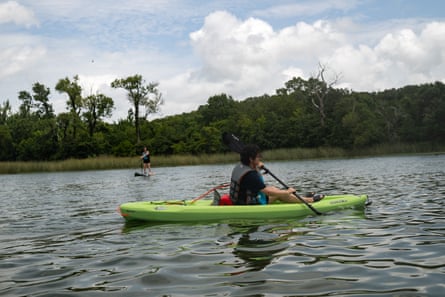
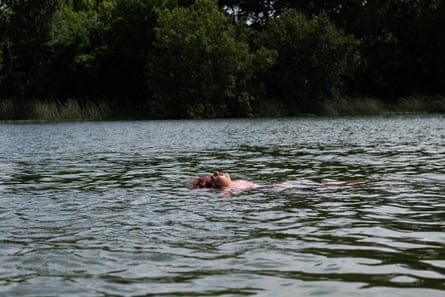
For the first time in his life, 17-year-old Alastair Mendoza didn’t think twice about jumping in the water. He kayaked through tangles of reeds, taking in the schools of minnows beneath him and the hawks overhead. He splashed around with friends he had made only days prior.
“I actually felt comfortable,” Mendoza said of swimming in public, something trans kids like him often struggle with. But at Color Splash Out, a four-day summer camp open to queer and trans youth in Texas, Mendoza swam whenever he could. “There was less fear of judgment and anxiety knowing that you were safe around these people,” he said.
Led by Yadi Martínez-Reyna, a nonbinary minister, Color Splash Out evolved from their inclusive religious practice into a secular, non-denominational space where LGBTQ+ kids like Alastair can play, create and connect without scrutiny.
“I wanted them to come and be themselves and have fun like you would at a regular summer camp, without the barriers of misgendering or feeling embarrassed or ashamed,” said Martínez-Reyna. “It’s about creating this space for self-esteem, self-reliance and self-empowerment, things they can take with them.”
Many of the attendees this year come from the Rio Grande Valley, a majority Latino region that is one of the poorest areas in the US. This is against the backdrop of a slew of anti-trans legislation and fear-mongering rhetoric in the state. Last year, Texas passed seven anti-trans bills, including a bathroom ban in government buildings, prohibitions on amending gender identity in certain records and the expansion of a 2023 ban on medical transition care for minors. Research has shown that LGBTQ+ youth who have at least one LGBTQ-affirming space report lower rates of attempting suicide. In the Rio Grande Valley, there are no queer youth organizations.
“There are not a lot of safe spaces,” said Nix Pasivan, 13, of their Santa Rosa hometown in the valley region.
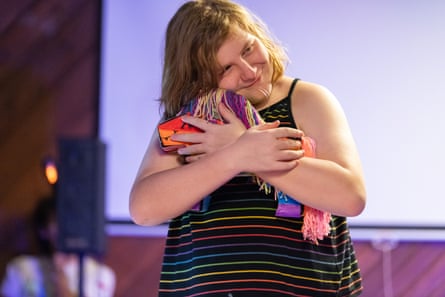
Pasivan identifies as nonbinary and their public school required them to cut their hair short, a traumatic experience they said they sobbed through. At camp, Pasivan said, “I’m so excited to be here, I just keep saying that, and I’m gonna keep saying it until mosquitoes start attacking me.”
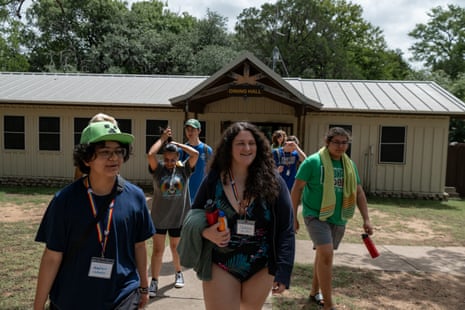
At Color Splash Out, campers pay what they can, which means many pay nothing. The venue location changes every year due to safety concerns and a shoestring budget. Cabins, referred to as “houses” – inspired by ballroom culture and drag balls – are named each summer by campers. This year, houses included the Glitter Gorgons and the Rainbow Legends.
Besides participating in games and activities, campers also talk about the range of LGBTQ+ identities and skills for overcoming stress. At the beginning of camp, house leaders ask kids to share the names and pronouns they would like to go by while there.
“This is the first time I’ve ever heard someone say my name in public,” said Velvet, 11, who is nonbinary and not out to most members of their heavily Catholic family. Their mother requested not to use Velvet’s last name for privacy.
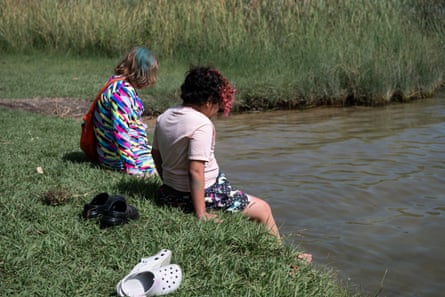
Their parent, Ari Garza, who volunteered at the camp, worries about how Velvet will acclimate to starting middle school in the fall. A school-assigned therapist once told them to expect to be bullied.
Garza was one of several adults at camp who described the experience as meaningful, not just for the kids, but for them, too. “It’s like you’re healing your own inner child by making this happen for kids in this generation,” Garza said.
After ending a 20-year marriage with Velvet’s father, Garza came out as a lesbian, citing the need to set a strong example of bravery and break cycles of silence for Velvet and their older sister, who also identifies as a lesbian. “If I’m not brave enough, how are they going to feel safe?” they said.
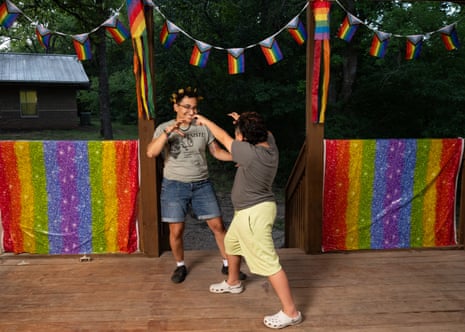
Camp director Adora Ysaguirre said it’s the campers that inspire her. “I remember being intimidated by the confidence these kids had,” said Ysaguirre, about her first time at camp post-transition. “[Their confidence] is something I still pull from.”
Ysaguirre said she was doxxed and lost a teaching job in Boerne, Texas, for being trans. She has also faced harassment and multiple physical assaults. Eventually she took up sumo wrestling “to be able to take hits”, she said.
Ysaguirre said that kids often tell her she’s the oldest trans woman they have ever seen, and that they did not know it was possible to make it that far. “I have had a lot of heavy experiences … yet I’m still here … if somebody is struggling, I can sit with them and I can carry their weight with them, and it’s something I’m privileged to do.”
Color Splash Out invites former campers to become “fellows” once they turn 18 and help plan camps, fundraise and serve as a mentor to younger kids. House leader Cel Blanco understands how important it is to stay connected and supported – it’s why they keep coming back to volunteer at camp. They said when they aged out of their Dallas queer youth group and lost their community, they fell into an abusive relationship. “I know I’m not the only one,” they said. “It took so much to find me again.”
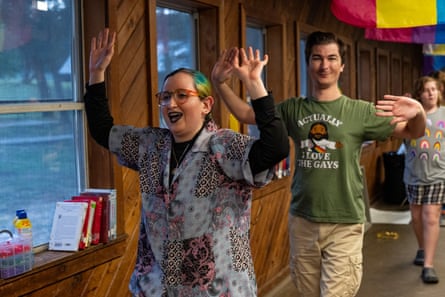
Since the federal funding cuts for non-profits, Color Splash Out has come to operate even more like a mutual aid project. Supplies were recycled from schools and personal use – this year, kids constructed group projects out of Frito-Lays boxes. Along the windowsills of the dining hall sat rows of banned young adult books in genres such as queer romance and social justice, donated by local school librarians who had to comply with conservative policies. The kayaks were lent by a returning camper’s mom who also volunteered as the camp’s nurse.
In order to make the camp happen each year, Yadi calls around for funding support from their network of religious leaders and regional connections. Three progressive reverends supported the camp this year; Yadi’s friends covered the rest of the costs. “It’s very grassroots, how we do things,” Yadi says. “I call it the little unicorn that could.”
After a last breakfast of migas, a Tex-Mex staple, Mendoza, Pasivan and Velvet took a van home, 8 hours south to the Rio Grande Valley. “When I came back,” said Pasivan the following week, “what I have to deal with felt a lot lighter, because now I understand more about it.”
Mendoza said he plans to become a Color Splash Out fellow next year. “Everyone made an effort to include people,” he said. “I didn’t really have that when I was first coming out … Everybody should have something like that.”